Yes, where your buyers are US payers, health systems or platforms with formal vendor risk programmes. HITRUST certification does not create demand for your product, but it removes the security objection, qualifies you for RFPs that exclude uncertified vendors, shortens security review and supports larger, enterprise-wide contracts.
Where in the sales funnel does HITRUST help?
| Funnel stage | Without HITRUST | With HITRUST |
| Qualification | Excluded from RFPs listing HITRUST as mandatory | Eligible |
| Evaluation | Marked down on scored security criteria | Full marks on assurance |
| Security review | 300 plus question questionnaire, evidence calls, 8 to 12 weeks | Certification letter plus short supplemental, often 2 to 4 weeks |
| Legal and BAA | Extra audit rights and security exhibits negotiated | Standard terms more readily accepted |
| Expansion | Blocked from enterprise rollout until assurance improves | Approved as a higher tier vendor |
| Renewal | Annual re-review from scratch | Refresh of current certification |
What commercial outcomes should you expect?
Treat these as hypotheses to measure, not guarantees:
1. Access. The clearest gain. Some opportunities are simply closed to uncertified vendors.
2. Speed. Security review is often the longest single stage. Cutting weeks from it pulls revenue forward.
3. Win rate. Where HITRUST is scored, certification removes a differentiator that competitors use against you.
4. Deal size. Risk teams approve broader data access and more business units for vendors with stronger assurance.
5. Retention. Renewals proceed without a security re-negotiation.
6. Partner channels. EHR marketplaces, cloud marketplaces and reseller agreements often screen on certifications.
Which metrics prove it?
Set a baseline for the 12 months before certification and compare.
| Metric | Definition |
| Security review cycle time | Days from questionnaire receipt to security approval |
| Questionnaires completed | Count and hours per quarter |
| RFP eligibility rate | RFPs you could bid as a share of RFPs seen |
| Win rate in healthcare enterprise | Closed won over closed total |
| Security-stalled pipeline | Value of deals paused at security review |
| Average contract value | Before and after |
| Engineering hours on sales support | Hours per deal |
A CFO reviewing the HITRUST investment should see these on the quarterly dashboard.
When does HITRUST not help you win?
- Your buyers are outside US healthcare and ask for ISO 27001 or SOC 2.
- Your product does not touch sensitive data.
- Your sales problem is product fit or pricing. Certification will not fix that.
- Your certified scope excludes the product you are selling. This is the most avoidable failure.
How do you turn the certificate into sales results?
A certificate sitting in a compliance folder wins nothing. Build the enablement around it:
1. Trust page. Publish certification type, scope summary, date and how to request the letter under NDA.
2. Sales playbook. One page on what HITRUST is, which level you hold, what it covers, and approved wording.
3. Pre-filled questionnaires. Maintain SIG and CAIQ responses mapped to HITRUST evidence.
4. RFP library. Standard answers referencing the certification.
5. Proactive sharing. Send the letter at the start of security review, not when asked.
6. Customer success. Notify existing customers’ vendor management teams on certification and each renewal.
7. Press and social. Follow HITRUST’s communication guidelines for announcements.
What about start-ups and offshore service providers?
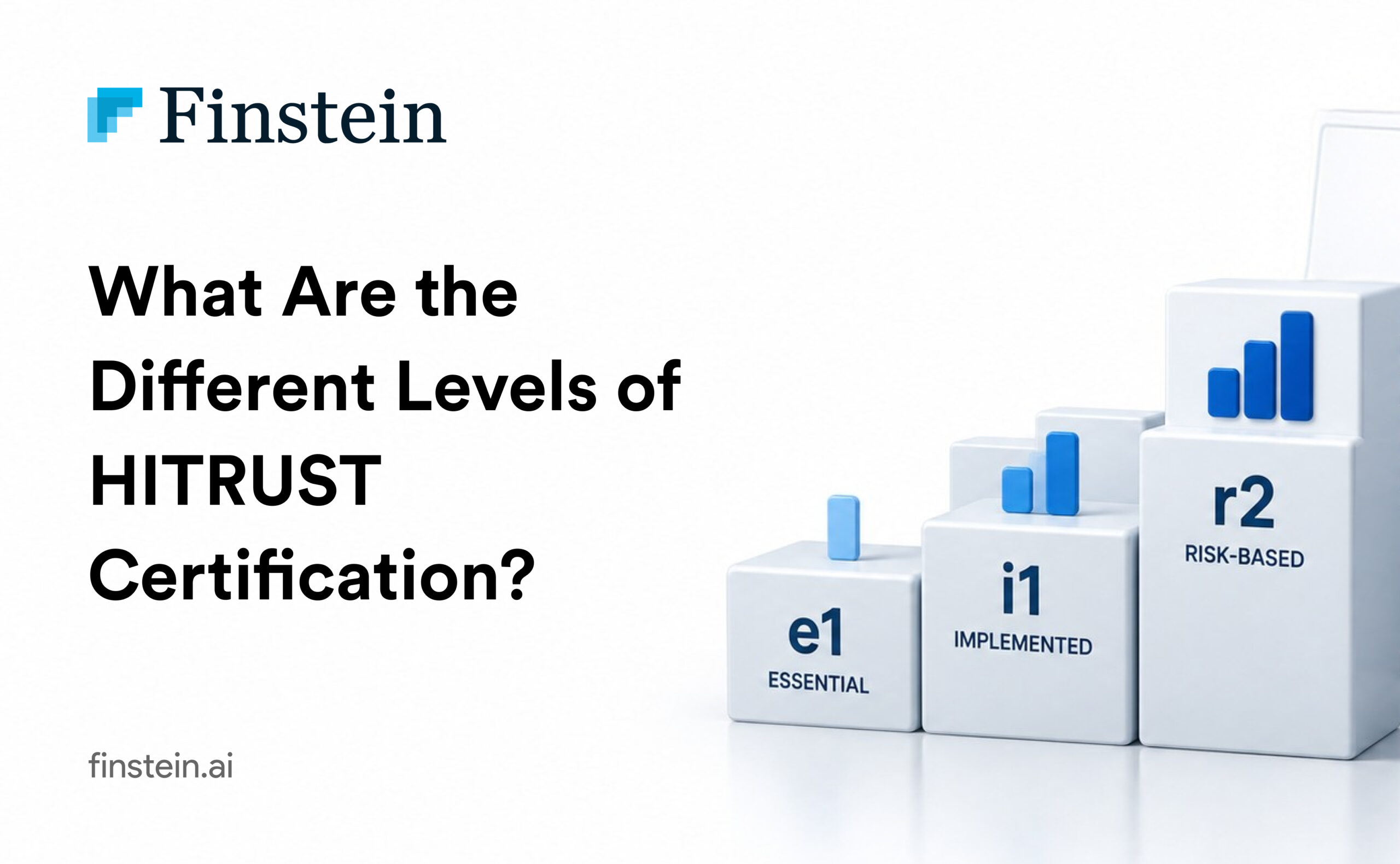
For early-stage health tech, an e1 or i1 can be the difference between a pilot and a production contract. For India, UK and Middle East based service providers selling into US healthcare, HITRUST also answers the unspoken question about offshore data handling with a US-recognised, independently validated standard.
Key takeaways
- HITRUST removes barriers. It does not replace product value.
- Biggest gains: RFP eligibility, faster security review, enterprise expansion.
- Measure the impact with a before and after baseline.
- Make sure certified scope matches what you sell.
- Build sales enablement around the certificate.
Frequently asked questions
Does HITRUST certification increase sales?
It increases eligibility and reduces friction in US healthcare enterprise sales. The revenue effect depends on how much of your pipeline requires it.
Do healthcare RFPs require HITRUST?
Many payer and health system RFPs list HITRUST as mandatory or as a scored criterion for vendors handling PHI.
How much faster is security review with HITRUST?
Vendors commonly report reviews shortening from months to weeks, though results vary by customer.
Is HITRUST useful for start-ups?
Yes. The e1 and i1 give start-ups a credible assurance artefact for their first enterprise healthcare deals.
Can I tell prospects we are pursuing HITRUST?
Yes, if accurate. State the level, assessor engagement and target date, and avoid implying you are already certified.
About Finstein
Finstein is a HITRUST Authorized External Assessor. Our team includes CCSFP and CHQP qualified HITRUST professionals, CISA certified auditors and ISO 27001 lead auditors, led by Chartered Accountants. We support readiness assessments, validated e1, i1 and r2 assessments, interim assessments and recertification for organisations in the US, India, the UK and the Middle East that serve US healthcare, using an efficient remote delivery model. Book a revenue impact session.
#HITRUST #HITRUSTCSF #HIPAA #HealthcareCybersecurity #HealthcareCompliance #Cybersecurity #DataSecurity #VendorRiskManagement #GRC #HealthTech #SOC2 #ISO27001