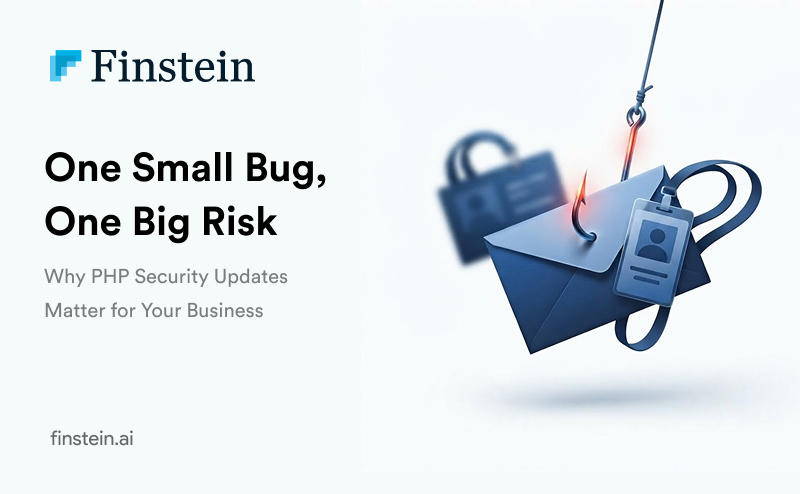
A small software flaw can become a major business risk. Is your website ready?
Your website may look perfectly normal. Customers can browse your pages, employees can access business applications, and transactions may continue without interruption.
But beneath the surface, an outdated software component or an unpatched vulnerability could create an opportunity for attackers.
This is why cybersecurity is not just about firewalls, antivirus software, or preventing suspicious emails. It also means keeping the software that powers your business applications secure.
PHP security vulnerabilities are a useful reminder of how important this responsibility has become.
What Is PHP, and Why Should Businesses Care?
PHP is a server-side programming language widely used to build dynamic websites and web applications. It helps applications process requests, interact with databases, manage sessions, and deliver content to users.
For businesses, PHP may be part of the technology behind a corporate website, customer portal, e-commerce platform, or internal application.
When the software powering these systems contains a security vulnerability, the impact can extend beyond the code itself.
The real concern isn’t simply that a bug exists. It’s what an attacker might be able to do with it.
When a Small Software Flaw Becomes a Security Threat
Not every software bug creates a cybersecurity risk. However, certain flaws in how applications handle memory, process requests, or validate input can have serious consequences.
Two technical concepts help illustrate the potential danger:
- Memory corruption
Memory corruption occurs when software handles memory incorrectly. Depending on the underlying flaw and how the affected component is used, this may cause unexpected behaviour, application crashes, or potentially exploitable conditions. - Use-after-free vulnerabilities
A use-after-free vulnerability occurs when a program attempts to access memory after that memory has been released. Under certain conditions, attackers may be able to exploit this behaviour to compromise the affected process.
The actual impact depends on the vulnerability, the software version, the system configuration, and the protections already in place.
In severe cases, a successfully exploited vulnerability can potentially allow an attacker to execute unauthorised code on a server.
That could turn a seemingly minor software issue into a serious business security incident.
What Could This Mean for Your Business?
Imagine that your business relies on a website to generate leads, an online portal to serve customers, or a web application to manage daily operations.
If an exposed application is running vulnerable software, the potential consequences may include:
Unauthorised access: An attacker may gain access to resources they should not be able to reach.
Data exposure: Customer information or sensitive business data could be at risk, depending on the attack and system permissions.
Application disruption: Exploitation may affect the availability or reliability of business services.
Operational and reputational damage: Investigating an incident, restoring systems, and rebuilding customer trust can consume significant time and resources.
These outcomes are not inevitable whenever a vulnerability is discovered. Risk depends on whether the system is affected, whether it is exposed, and whether the flaw can be successfully exploited.
However, waiting until a problem becomes visible is rarely the best security strategy.
Five Steps to Reduce Your PHP Security Risk
You don’t need to wait for an incident to start improving your security posture. A few practical steps can help your team reduce exposure. - Identify Your PHP Versions
Start by identifying the PHP versions running across your websites, applications, servers, and hosting environments.
Don’t assume that every application is up to date simply because the main website appears to be working properly. - Check Official Security Advisories
Review official PHP security announcements and trusted vendor advisories to determine which versions are affected and which updates are available.
Do not rely solely on social media posts or headlines. Confirm the vulnerability identifier, affected versions, severity, and recommended remediation using authoritative sources. - Apply Security Updates Promptly
Upgrade affected software to a supported, patched version following the official guidance.
Before deploying updates, test compatibility with your applications, dependencies, and integrations. For critical business systems, plan changes carefully to minimise disruption. - Review Logs and Monitor Systems
Look for unusual application behaviour, unexpected requests, suspicious authentication activity, and other indicators relevant to the affected system.
Monitoring does not replace patching, but it can help your team identify potential incidents and investigate suspicious activity. - Establish a Continuous Vulnerability Management Process
Security should not depend on someone remembering to check for updates.
Maintain an inventory of software assets, track vulnerabilities, assign remediation responsibilities, and verify that patches have been applied successfully. Prioritise issues based on severity, exposure, exploitability, and business impact.
The goal is not merely to install updates. It is to know what you are running, understand your exposure, and verify that risks have been addressed.
Security Is an Ongoing Business Responsibility
A vulnerability announcement is more than a technical update. It is an opportunity for organisations to review how they identify, assess, and manage software risks.
Even well-maintained systems can develop vulnerabilities. What matters is how quickly and effectively an organisation responds.
Proactive patch management, continuous monitoring, secure development practices, and clear incident response procedures all contribute to a stronger security posture.
For business leaders, this means treating cybersecurity as an ongoing operational priority not a task that ends after deployment.
How Finstein Helps Businesses Build More Reliable Technology
At Finstein, we believe technology should support business growth while remaining reliable, maintainable, and secure.
From digital transformation and application development to business technology solutions, building dependable systems requires attention to the entire lifecycle not just the initial implementation.
Regular maintenance, timely updates, and a structured approach to managing technical risks help organisations build a stronger foundation for their digital operations.
Because better technology isn’t just about what a system can do. It’s also about how responsibly it is maintained.
Final Takeaway: Don’t Wait for a Security Incident
One overlooked vulnerability can create unnecessary risk for a business. Identifying affected software, reviewing trusted security advisories, applying appropriate patches, and monitoring systems are practical steps every organisation should take.
Build better. Maintain smarter. Secure better.
Is your organisation confident that its business-critical applications are running supported, secure software?
Start with a simple question: When was your PHP environment last checked for security updates?
source :