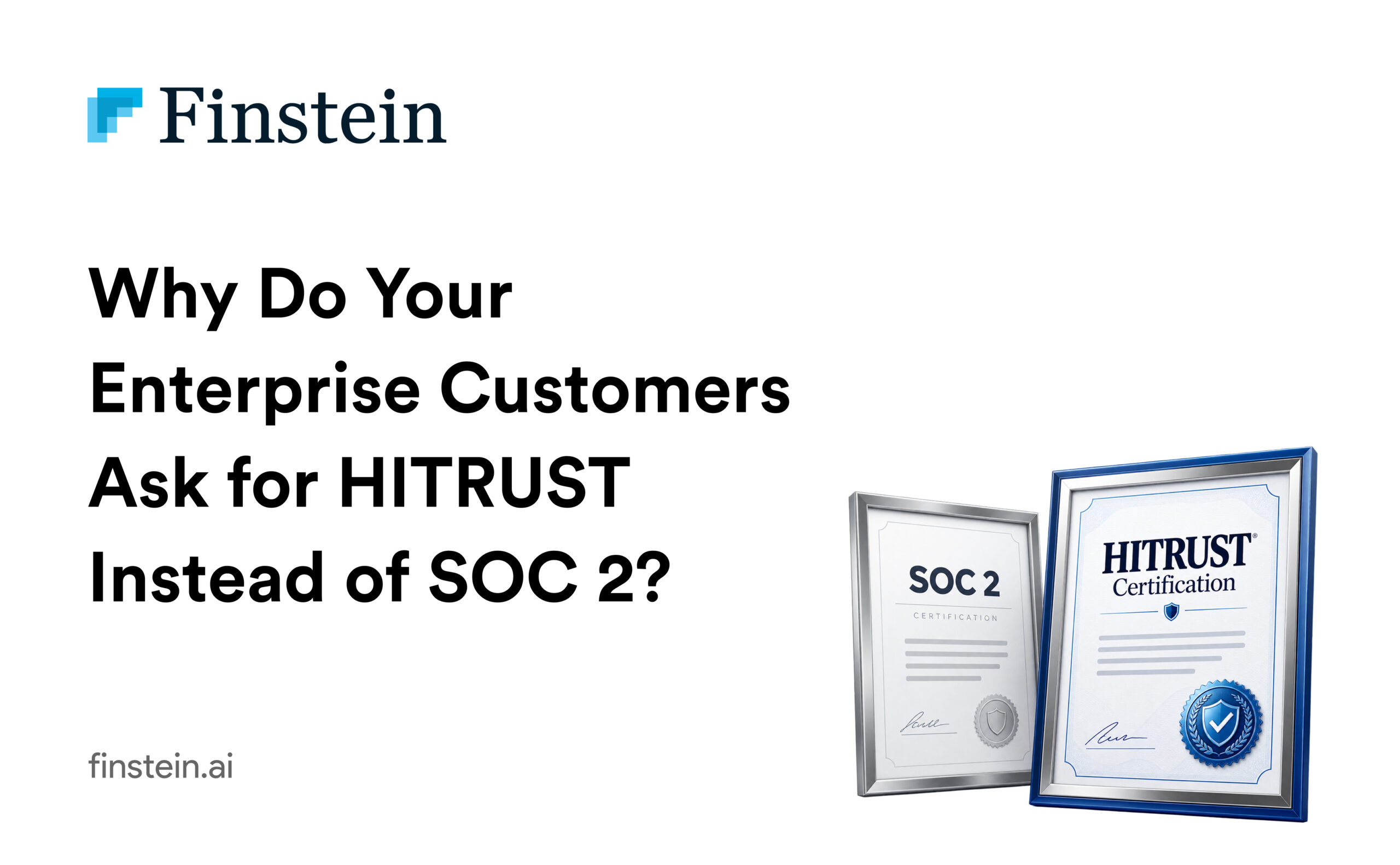
Enterprise healthcare customers ask for HITRUST because it gives their risk teams something SOC 2 cannot: a fixed, prescriptive set of controls, numeric scoring with pass thresholds, quality assurance by a central body, and results that are directly comparable across hundreds of vendors. It reduces the judgement their analysts must apply and is easier to defend to auditors and boards.
Look at it from the TPRM analyst’s chair
A vendor risk analyst at a large payer may review hundreds of vendors a year. For each SOC 2 report they must:
1. Check the auditor is credible.
2. Read the system description to understand scope.
3. Determine which Trust Services Criteria were included.
4. Read the vendor-defined controls and judge whether they are adequate.
5. Review exceptions and management responses.
6. Map gaps to their own policy and HIPAA.
7. Issue follow-up questions.
With a HITRUST certification they check entity, scope, level, dates and CAPs. The control set is already known. The scoring is already done. That difference in analyst hours, multiplied across a vendor portfolio, is the real driver.
Seven reasons enterprises prefer HITRUST
| # | Reason | Why it matters to the customer |
| 1 | Prescriptive requirements | Vendors cannot define lenient controls |
| 2 | Quantitative scoring and thresholds | A clear pass line, not a narrative opinion |
| 3 | Central quality assurance | HITRUST reviews every validated assessment, reducing reliance on assessor quality |
| 4 | Comparability | Every i1 covers the same ground, enabling vendor benchmarking |
| 5 | Healthcare alignment | HIPAA is embedded, not bolted on |
| 6 | Defensibility | Easier to justify to regulators, internal audit and the audit committee |
| 7 | Their own certification | Customers pursuing r2 need strong third-party assurance and HITRUST certified vendors simplify that |
Is SOC 2 really inadequate?
No, and it is worth being balanced. A well-scoped SOC 2 Type 2 from a reputable CPA firm provides strong evidence of operating effectiveness over time. Its limitations for healthcare TPRM are structural:
- Variable depth. Two SOC 2 reports can differ widely in control rigour.
- No pass mark. A report with several exceptions is still a report.
- Generic criteria. HIPAA mapping is optional.
- Scope freedom. Vendors may carve out the very systems the customer cares about.
SOC 2 requires more interpretation. HITRUST requires less. Large risk teams optimise for less.
The role of recent events
Major third-party cyber incidents in US healthcare in 2024 disrupted claims processing nationally and drew attention from regulators and legislators. Boards asked management how vendor risk was being controlled. Many organisations responded by tightening requirements for critical vendors and favouring standardised, validated assurance. HITRUST was already embedded in payer vendor standards and was the natural choice.
What should you do when a customer asks for HITRUST and you hold SOC 2?
1. Clarify the ask. Which level, by when, and for which product scope?
2. Offer a bridge. Share your SOC 2 Type 2, a HIPAA mapping and a HITRUST readiness timeline.
3. Propose e1 as an interim. It can often be achieved in three to five months.
4. Negotiate the contract language. “Obtain HITRUST i1 within 12 months of effective date” is reasonable.
5. Reuse evidence. Much SOC 2 evidence maps to HITRUST.
6. Consider combined delivery. One evidence cycle feeding both reports.
Will customers accept SOC 2 plus a HITRUST mapping?
Some will, particularly mid-market buyers. Large payers generally will not, because a mapping performed by the vendor or its auditor lacks HITRUST’s QA. If a customer’s written vendor standard names HITRUST certification, assume a mapping is a temporary measure only.
Key takeaways
- The preference is about analyst efficiency, comparability and defensibility.
- SOC 2 is sound assurance but requires more interpretation.
- Third-party incidents have raised the bar for critical vendors.
- Clarify the level and deadline before reacting.
- Use SOC 2 evidence and an e1 to bridge the gap.
Frequently asked questions
Why is SOC 2 not enough for some healthcare customers?
Because controls are vendor-defined, there is no pass threshold and HIPAA alignment is optional, which requires more analysis by the customer’s risk team.
Why do payers prefer HITRUST?
It provides prescriptive, scored and centrally quality-assured results that are comparable across all vendors.
Can I push back when a customer asks for HITRUST?
You can propose alternatives or a timeline, but if their vendor standard mandates HITRUST, expect to need it for higher risk tiers.
Will a SOC 2 with HITRUST mapping be accepted?
Sometimes by mid-market buyers, rarely by large payers as a permanent solution.
Does having SOC 2 make HITRUST easier?
Yes. A mature SOC 2 programme provides reusable evidence and shortens readiness.
About Finstein
Finstein is a HITRUST Authorized External Assessor. Our team includes CCSFP and CHQP qualified HITRUST professionals, CISA certified auditors and ISO 27001 lead auditors, led by Chartered Accountants. We support readiness assessments, validated e1, i1 and r2 assessments, interim assessments and recertification for organisations in the US, India, the UK and the Middle East that serve US healthcare, using an efficient remote delivery model. Get help answering a customer’s HITRUST request.