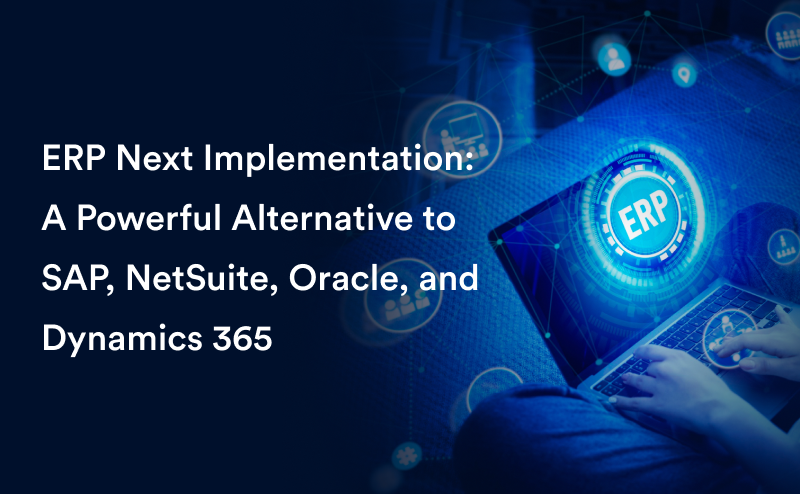
Are you searching for an agile, cost-effective, and scalable ERP solution that rivals the giants like SAP, NetSuite, Oracle, and Microsoft Dynamics 365? Meet ERPNext — the open-source ERP platform that is redefining how modern businesses run their operations.
What is ERPNext?
ERPNext is a robust, cloud-native Enterprise Resource Planning (ERP) software that helps businesses streamline their finance, HR, sales, purchase, inventory, manufacturing, and project management — all in one integrated platform. Built on the Frappe framework, ERPNext combines flexibility, modularity, and affordability, making it a powerful tool for SMEs and growing enterprises.
Why Choose ERPNext Over SAP, NetSuite, Oracle, or Microsoft Dynamics?
In a landscape dominated by legacy ERP providers like SAP, Oracle, NetSuite, and Microsoft Dynamics, many businesses — particularly small and mid-sized enterprises — are seeking leaner, more flexible alternatives that offer faster implementation, lower total cost of ownership, and greater control over customization. ERPNext is rapidly gaining traction as a modern ERP platform that delivers enterprise-grade functionality without the overhead and complexity associated with traditional systems.
Comparative Snapshot: ERPNext vs Leading ERP Platforms
Our ERPNext Implementation Services
Successful ERP implementation requires more than just software deployment — it demands a deep understanding of business processes, change management, and long-term support. At Finstein, we bring a consultative approach to every ERPNext implementation, ensuring alignment with your operational goals, compliance needs, and scalability requirements. Whether you’re transitioning from a legacy system or implementing ERP for the first time, our team delivers end-to-end support to drive measurable outcomes.
- Business process mapping and gap assessment
- ERPNext module configuration and deployment
- Custom module and workflow development
- Legacy data migration
- End-user training and documentation
- Ongoing support and enhancements
Final Thoughts
ERPNext is not just an alternative to legacy ERP platforms — it is a strategic enabler for businesses that want flexibility, agility, and long-term cost efficiency. For organizations rethinking their digital core, ERPNext offers the perfect balance of capability and control.
Why Finstein is a Trusted ERPNext Implementation Partner
At Finstein, we specialize in delivering end-to-end ERPNext implementation services tailored to the needs of growing businesses across manufacturing, services, retail, and distribution. As a trusted ERPNext partner, our team brings deep expertise in business process reengineering, system customization, and cloud-based deployment. We help clients seamlessly migrate from legacy platforms like SAP, Tally, QuickBooks, and Microsoft Dynamics to ERPNext’s open-source ERP framework, ensuring faster go-live and greater return on investment. Our capabilities span requirement analysis, module configuration, data migration, user training, and post-go-live support — making Finstein the go-to choice for organizations seeking a scalable, cost-effective, and fully integrated ERP solution. With a focus on digital transformation, workflow automation, and India-compliant ERP systems, Finstein empowers enterprises to modernize operations while maintaining full control over customization and infrastructure.
Ready to get started?
Email: praveen@finstein.ai
Call/WhatsApp: +91 99400 16037
Visit: www.finstein.ai
Frequently Asked Questions (FAQ) About ERPNext Implementation
1. What is ERPNext and how is it different from other ERP systems?
ERPNext is a modern, open-source ERP system that offers a complete suite of business management modules — ranging from finance and HR to manufacturing and supply chain. Unlike proprietary platforms such as SAP S/4HANA, Oracle ERP Cloud, or NetSuite, ERPNext provides full flexibility, lower costs, and complete source code access, making it ideal for custom ERP deployments.
2. Is ERPNext suitable for small and medium enterprises (SMEs)?
Yes. ERPNext is particularly well-suited for SMEs and mid-market companies looking for an affordable, scalable, and modular ERP solution. It offers the same breadth of features found in enterprise-grade systems, but with significantly lower implementation and licensing costs.
3. How much does ERPNext implementation cost?
ERPNext itself is free and open-source, meaning there are no license fees. However, implementation costs vary based on the scope, complexity, customizations, and whether you choose on-premise or cloud deployment. At Finstein, we offer cost-effective ERPNext implementation packages tailored for startups, SMEs, and enterprises.
4. Can ERPNext be customized for specific industry needs?
Absolutely. One of ERPNext’s greatest strengths is its customizability. Built on the Frappe framework, ERPNext allows deep customization of forms, workflows, reports, dashboards, and user permissions. We at Finstein specialize in delivering industry-specific ERP solutions for sectors like manufacturing, retail, healthcare, education, and services.
5. How long does it take to implement ERPNext?
Implementation time can range from 4 to 12 weeks, depending on the number of modules, data migration needs, and level of customization. ERPNext projects generally require less time than SAP or Oracle due to its agile structure and modular deployment approach.
6. Is ERPNext cloud-based or on-premise?
ERPNext supports both cloud deployment and on-premise hosting. You can choose to host on AWS, Google Cloud or use Frappe Cloud or your own infrastructure. This flexibility makes ERPNext a preferred ERP for companies concerned with data control, security, and scalability.
7. Is ERPNext compliant with Indian tax laws like GST, TDS, and e-Invoicing?
Yes. ERPNext has built-in features for GST compliance, TDS deductions, e-Invoicing, E-Way Bills, and other statutory reporting requirements under Indian law. This makes it an ideal choice for businesses operating in India.
8. Can I migrate from Tally, QuickBooks, SAP, or D365 to ERPNext?
Yes. At Finstein, we have helped numerous clients migrate from legacy ERP systems like Tally ERP 9, SAP ECC, Microsoft Dynamics 365, and QuickBooks. Our migration services include data mapping, transformation, cleansing, and validation to ensure a seamless transition.
9. Is ERPNext secure for enterprise use?
ERPNext supports enterprise-grade security features such as role-based access control (RBAC), two-factor authentication, audit logs, and SSL encryption. Security can be further enhanced based on your hosting and IT policies.
10. What support is available post-implementation?
Finstein provides comprehensive post-go-live support, including issue resolution, training, system enhancements, version upgrades, and SLA-based maintenance packages. Our support model ensures your ERP system evolves with your business.
Visit our site : Finstein
#ERPNext #SAPAlternative #OpenSourceERP #BusinessTransformation #LowCostERP #SMBETech #ERPImplementation #FrappeFramework #GrowthReady #TailoredERP #StartupTech #ScaleSmart #ERPJourney