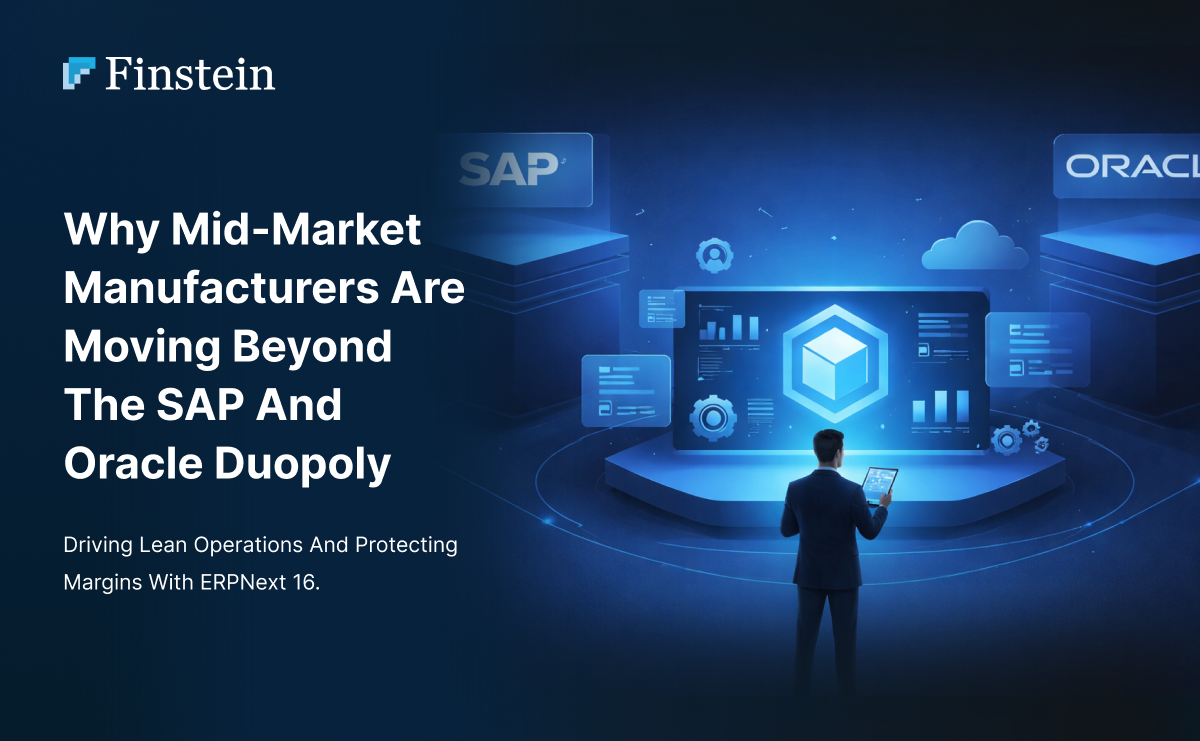
For decades, the manufacturing sector has been told that enterprise-grade excellence requires a choice between two monolithic giants: SAP or Oracle. In 2026, that narrative is being dismantled. As mid-market manufacturers face increasing pressure to modernize their shop floors while maintaining lean operations, the high costs and rigid structures of legacy ERP systems have become more of a burden than a benefit.
The mid-market is currently experiencing a strategic pivot. Leaders are moving away from “Brand Name” security toward “Architectural” agility. ERPNext 16 has emerged as the definitive alternative, offering the deep manufacturing functionality required for complex production environments without the prohibitive per-user “growth tax” associated with traditional Tier 1 providers.
The Mid-Market Manufacturing Crisis
Mid-market manufacturers often find themselves in a “complexity gap.” They have outgrown basic accounting software but find that the jump to SAP S/4HANA or Oracle Cloud ERP introduces a level of administrative overhead and cost that erodes their competitive edge.
Why Legacy Systems are Failing the Mid-Market:
- The Implementation Bottleneck: A typical SAP or Oracle deployment for a multi-plant manufacturer can span 12 to 24 months. In a fast-moving market, a two-year wait for a “live” system is an unacceptable delay that stalls innovation.
- Prohibitive Total Cost of Ownership (TCO): Beyond the initial licensing, the ongoing requirement for specialized, high-cost consultants for every minor workflow adjustment creates a continuous drain on capital. You can evaluate the specific fiscal impact of these overheads by using our TCO calculator.
- Rigid Process Models: Legacy systems often force manufacturers to change their successful, proprietary processes to fit the “Standard Best Practice” of the software. For a mid-market player, their unique process is often their primary competitive advantage.
- Disconnected Data Silos: Despite the promise of integration, many manufacturers still find themselves using spreadsheets to bridge the gap between their ERP and their actual shop floor reality.
The ERPNext 16 Advantage: Smarter, Leaner, and More Connected
ERPNext 16 represents a paradigm shift in how manufacturing software is architected. It is built on the Frappe framework, which prioritizes speed, flexibility, and real-time visibility. For a detailed breakdown of how this architecture holds up against legacy incumbents, see our ERPNext Benchmarking.
Core Manufacturing Capabilities of ERPNext 16:
- Advanced Material Requirements Planning (MRP): The latest version introduces a refined MRP engine that synchronizes demand forecasting, lead times, and current stock levels to ensure lean inventory without the risk of stockouts.
- Complex Bill of Materials (BOM) Management: With support for multi-level BOMs and version control, manufacturers can manage intricate product structures and engineering changes with absolute precision.
- Shop Floor Control and Job Cards: Real-time tracking of production progress allows managers to see exactly where a batch is on the floor, which workstation is active, and which operator is logged in.
- Integrated Quality Management: Quality inspections are no longer a separate task. They are embedded into the production workflow, ensuring that parts are verified at every critical gate before moving to the next stage.
- Stock Reservation: A standout feature of Version 16 is the ability to reserve raw materials against specific production plans, ensuring that high-priority orders are never delayed by inventory being “borrowed” for other tasks.
Solutions and Precautions for a Successful Migration
Transitioning from a legacy mindset to a modern, open-architecture ERP requires more than just a software installation. It requires a disciplined approach to data and process.
Strategic Precautions for Manufacturers:
- Adopt a Clean Core Strategy: Avoid the temptation to replicate legacy “bad habits” in your new system. Use the migration as an opportunity to simplify and standardize your workflows before applying technology.
- Master Data Integrity: The success of your MRP is entirely dependent on the accuracy of your lead times, scrap rates, and warehouse locations. Conduct a thorough audit and cleanup of your master data before the go-live.
- Phased Rollout: Rather than a “Big Bang” approach, consider a phased implementation. Start with core financials and inventory, then move to production planning and shop floor execution to minimize operational disruption.
- Invest in Change Management: Ensure your shop floor operators understand the value of the new system. A user-friendly mobile interface is useless if the team is not trained on the importance of real-time data entry.
Finstein specializes in architecting high-performance ERPNext 16 environments for manufacturers who demand more than just a standard implementation. We understand that in a manufacturing context, a “standard” setup is rarely sufficient. Our team combines deep industrial expertise with advanced technical knowledge to create a hardened ERP core that reflects your unique production reality.
We provide a comprehensive Manufacturing Readiness Audit to identify bottlenecks in your current processes and map them to ERPNext’s powerful feature set. From automating complex subcontracting workflows to integrating IoT sensors for real-time machine monitoring, Finstein ensures your ERP is a catalyst for EBITDA growth. We manage the entire migration lifecycle, ensuring that your data is secure, your team is trained, and your system is audit-ready from day one.
Final Thoughts
The choice for mid-market manufacturers in 2026 is no longer about which giant to follow, but about how to reclaim control over their own operational destiny. ERPNext 16 offers a path to manufacturing excellence that is faster, more affordable, and significantly more agile than legacy alternatives. By prioritizing architectural integrity and data sovereignty, manufacturers can focus on what they do best: building exceptional products.
Build a smarter factory. Own your architecture.
Reach out to our experts for a manufacturing tech stack audit at erpnext.finstein.ai
#ERPNext16 #ManufacturingExcellence #MidMarketManufacturing #CFOStrategy #FinsteinAI #SmartFactory #DigitalTransformation #LeanManufacturing #SupplyChainOptimization #IndustrialIoT