Look closely at your operational blueprint. Thousands of data points flow across your departments every minute. This digital velocity drives your efficiency, but it also creates a massive, silent vulnerability. When data changes without control, the foundation of your business integrity starts to crack.
As we move into 2026, the era of simply trusting system activity is over. The regulatory landscape has shifted and the cost of data negligence is now a material liability. This reality has pushed a formerly technical feature to the forefront of executive strategy. We are talking about comprehensive ERP audit trails.
The End of the Digital Black Hole
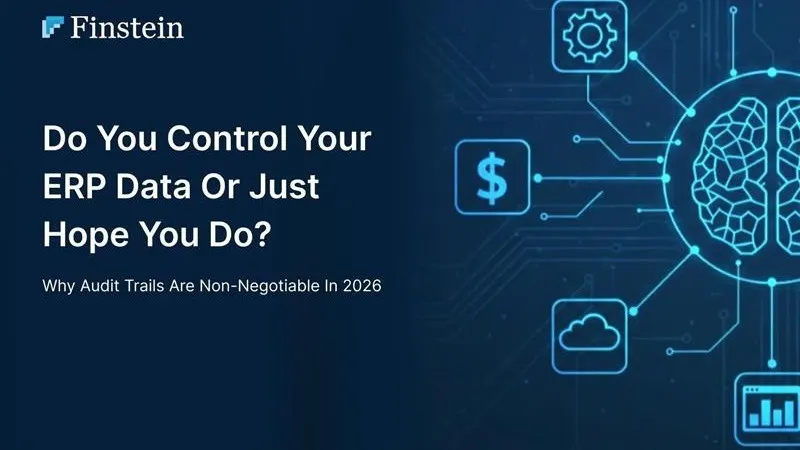
Without an audit trail, your ERP becomes a digital black hole. Data goes in, changes occur, and records vanish without a trace. It provides no documentary evidence for the sequence of activities that shape your business. A true audit trail answers the hard questions: Who, what, when, and where?
In the past, many organizations saw audit logs as a storage burden or a secondary concern. In 2026, that mindset is a target for regulators. Global frameworks now demand rigorous proof of data governance. If your system is a black hole where you cannot show who authorized a specific financial transaction, you are effectively non-compliant. The penalties have evolved from administrative hurdles to direct threats to your bottom line.
Proactive Governance Over Reactive Repair
Internal risks are often more damaging than external threats. A simple accidental modification of a Bill of Materials can derail production for weeks. If your system acts like a black hole, finding the source of that discrepancy is nearly impossible.
The solution is not just logging everything. It is an active governance strategy. You need environments where logging is immutable and granular by design. An effective system must show the before and after values of every field. It should tie every action to a verified user ID. Most importantly, these logs must be accessible to auditors without requiring constant IT intervention.
Ensuring Integrity with Finstein ERPNext
At Finstein, we recognize that an ERP implementation is incomplete without a robust governance framework. We do not just configure for efficiency. We build for accountability.
Leveraging the Frappe framework, Finstein ERPNext implementations offer built-in transparency across all modules. We ensure your architecture tracks every critical business object from Finance to Manufacturing. Our team helps you define which data points require the highest level of logging based on your specific risk profile. We turn your data from an unmanaged risk into a verifiable asset.
By 2026, the inability to produce a reliable audit trail is viewed as a failure of leadership. Trust is the currency of modern business and audit trails are the mechanism that verifies that trust. They provide the transparency required to lead with confidence in a complex digital world.
Ready to solidify your data integrity?
The transition to a fully accountable digital infrastructure is a strategic necessity. Assess your current posture to ensure your business remains resilient against global data standards.
See how we build high-impact, compliant ecosystems at erpnext.finstein.ai
#ERPNext #AuditTrail #DataGovernance #FinsteinAI #DigitalTransformation #BusinessIntegrity #CFOInsights #RiskManagement #ERPImplementation #Compliance2026