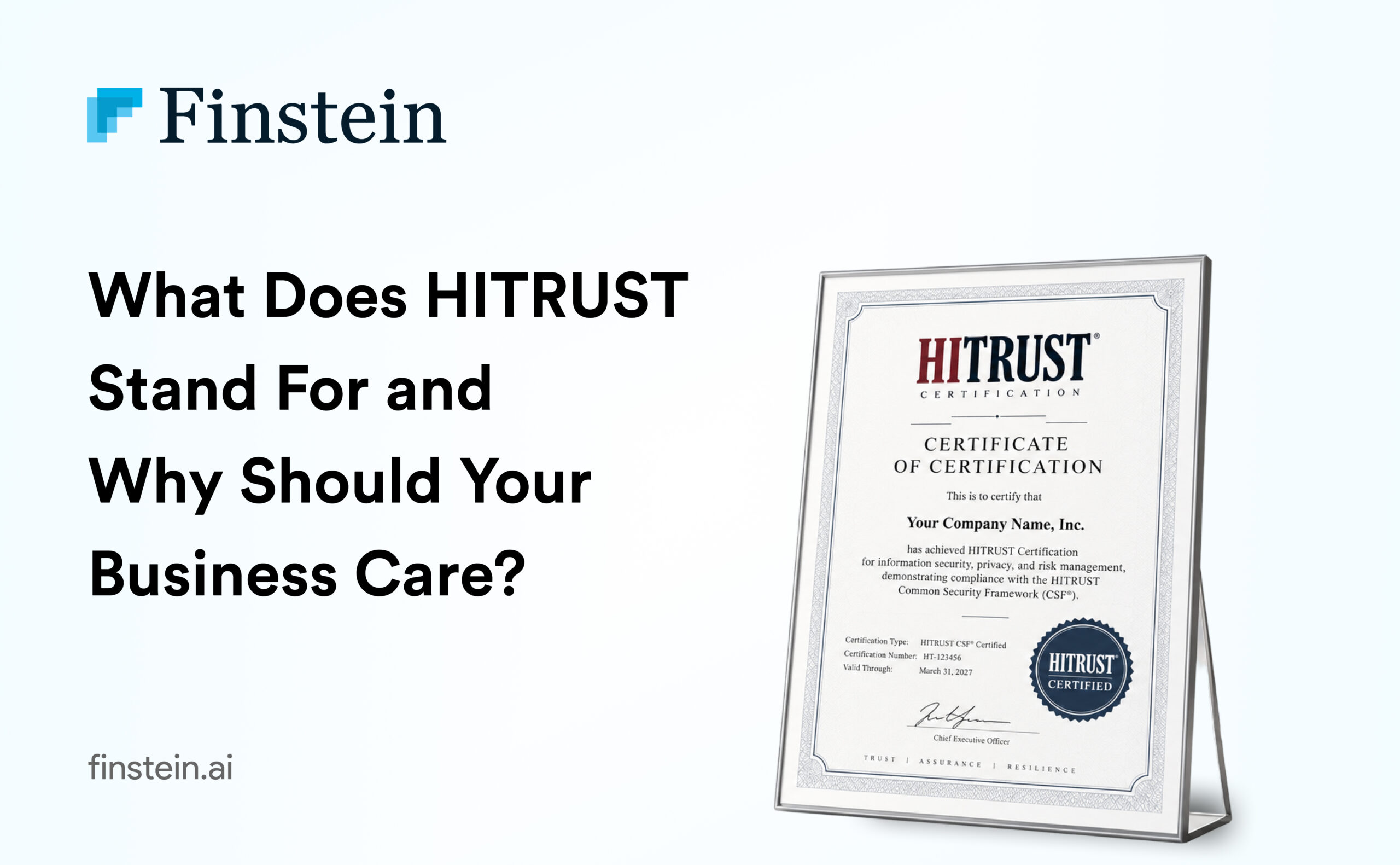
HITRUST originally stood for the Health Information Trust Alliance. Today the organisation simply uses the name HITRUST. It is a private standards body, founded in 2007, that publishes the HITRUST CSF, a certifiable security and privacy framework that consolidates HIPAA, NIST, ISO 27001, PCI DSS and other standards into one set of controls that an independent assessor can validate.
What does HITRUST actually mean?
HITRUST is both an organisation and a shorthand for the certification it issues. People use the word in three ways, and it helps to separate them:
1. HITRUST (the organisation). The HITRUST Alliance, headquartered in Frisco, Texas, maintains the framework, authorises assessor firms, operates the MyCSF platform and performs quality assurance on every validated assessment.
2. HITRUST CSF (the framework). The control catalogue and scoring methodology. “CSF” was originally “Common Security Framework”. The current major release is CSF v11, with v11.8.0 required for newly created e1 and i1 assessments from 7 May 2026.
3. HITRUST certification (the outcome). A formal certification letter and report issued by HITRUST after an Authorized External Assessor tests your controls and HITRUST’s own quality team accepts the results.
When a customer says “we need you to be HITRUST certified”, they mean the third item. When a security team says “we follow HITRUST”, they usually mean the second.
Is HITRUST a law or a government regulation?
No. HITRUST is not a law, a regulator or a government agency. HIPAA is the law. It is enforced by the US Department of Health and Human Services Office for Civil Rights (HHS OCR). HIPAA tells organisations to apply “reasonable and appropriate” safeguards to protected health information (PHI), but it does not tell them exactly how, and it offers no official certification.
HITRUST was created to fill that gap. It converts principle-based legal language into prescriptive, testable control requirements and adds an independent certification on top. That is why HITRUST is commonly described as the most practical way to demonstrate HIPAA security compliance, even though HHS does not formally endorse any certification.
What is inside the HITRUST CSF?
The HITRUST CSF harmonises more than 50 authoritative sources into a single control library. The sources include:
- HIPAA Security, Privacy and Breach Notification Rules
- NIST SP 800–53 and the NIST Cybersecurity Framework
- ISO/IEC 27001 and 27002
- PCI DSS
- GDPR and selected US state privacy laws
- CMS, FedRAMP and other sector requirements
The framework is organised into 19 assessment domains, ranging from Information Protection Program, Endpoint Protection and Access Control to Incident Management, Business Continuity and Data Protection and Privacy.
The commercial logic is “assess once, report many”. One HITRUST assessment can be used to answer questions from customers who think in HIPAA, NIST, ISO or SOC 2 terms.
What are the HITRUST certification levels?
HITRUST offers three validated assessment types. Choosing the right one is the single most important scoping decision.
The e1 and i1 test whether controls are implemented. The r2 also scores policy, procedure, measured and managed maturity, which is why it takes longer and carries more weight with enterprise buyers.
Why should your business care about HITRUST?
1. Your customers may already require it. Large US payers, health systems and pharmacy benefit managers frequently write HITRUST into vendor contracts and third-party risk management (TPRM) programmes. If you sell software, BPO, analytics, RCM, cloud hosting or AI services into US healthcare, the requirement tends to arrive with your first enterprise deal.
2. It shortens security questionnaires. A HITRUST certification letter answers a large share of vendor due diligence questions in one document. Sales teams report fewer custom questionnaires and faster security reviews.
3. It is evidence of “recognized security practices”. A 2021 amendment to the HITECH Act (Public Law 116–321) requires HHS OCR to consider whether an organisation had recognized security practices in place for the previous 12 months when deciding penalties after a breach. A maintained HITRUST certification is a strong way to evidence that.
4. It measurably reduces breach likelihood. HITRUST’s annual Trust Report has consistently reported that fewer than 1% of HITRUST certified environments reported a breach in the period reviewed. Validate the latest figure before quoting it, but the direction is consistent.
5. It is not just for healthcare. Financial services, SaaS, IT/ITeS and offshore service providers use HITRUST because the framework is industry agnostic and maps cleanly to NIST and ISO.
Who typically needs HITRUST certification?
- HIPAA business associates: health tech SaaS, medical billing and RCM firms, claims processors, transcription and coding providers
- Cloud and managed service providers hosting PHI
- Offshore delivery centres in India, the Philippines, the UK and the Middle East serving US healthcare clients
- Payers, health systems and large provider groups
- Digital health, telehealth and AI vendors processing patient data
How do you become HITRUST certified?
1. Scope. Define the systems, facilities and business units in scope and choose e1, i1 or r2.
2. Readiness assessment. Identify gaps against the applicable requirements.
3.Remediate. Close gaps. New controls must operate for at least 90 days before they can be tested as implemented.
4.Validated assessment. An Authorized External Assessor tests controls and scores them in MyCSF within a 90 day fieldwork window.
5. HITRUST quality assurance. HITRUST reviews the submission and issues the certification report.
6. Maintain. Interim assessment (r2) or annual recertification (e1, i1).
Key takeaways
- HITRUST stood for Health Information Trust Alliance. It is a private standards body, not a law.
- The HITRUST CSF unifies HIPAA, NIST, ISO 27001, PCI DSS and more into one certifiable framework.
- Three levels exist: e1, i1 and r2. The right choice depends on customer demand and data risk.
- The business case rests on contract eligibility, faster security reviews, regulatory defensibility and lower breach risk.
- Only a HITRUST Authorized External Assessor can perform a validated assessment.
About Finstein
Finstein is a HITRUST Authorized External Assessor with a team of CCSFP and CHQP qualified professionals, ISO 27001 lead auditors and CISA certified assessors. We support readiness, validated e1, i1 and r2 assessments, and interim and recertification work for organisations serving US healthcare. Book a 30 minute scoping call to confirm which HITRUST level your customers actually expect.