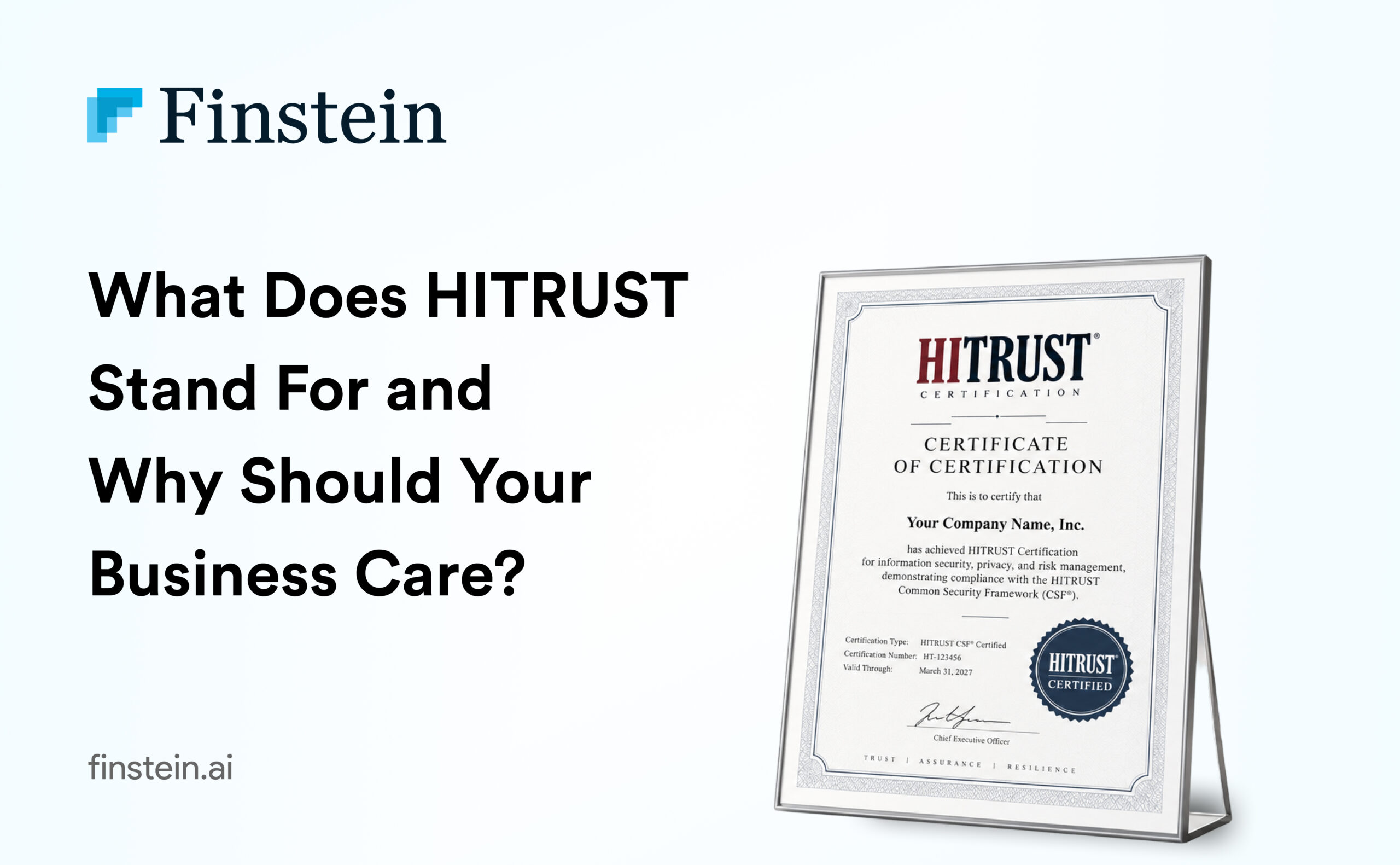
HITRUST certification is worth it when at least one of three conditions is true: a customer or prospect contractually requires it, more than roughly a quarter of your pipeline is US healthcare enterprise, or you hold large volumes of PHI. If none apply, a SOC 2 Type 2 report or a HITRUST e1 is usually the better first investment.
Why is this even a question?
HITRUST has a reputation for being expensive and demanding. Both are partly true. An r2 programme can take 9 to 15 months end to end and consume significant engineering, IT and compliance time. Leadership teams, and particularly CFOs, rightly ask whether the return justifies the spend.
The honest answer is that HITRUST is a commercial investment first and a security investment second. It should be evaluated like any other capital allocation decision: what revenue does it protect or unlock, what cost does it avoid, and what is the payback period?
What does HITRUST actually cost in money and effort?
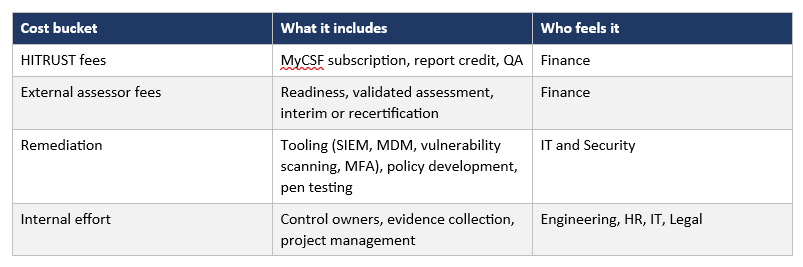
Internal effort is the bucket most companies under-estimate. For a first-time i1, plan for one dedicated project lead and part-time involvement from 8 to 12 control owners across the fieldwork period.
What is the return? A five-part ROI framework
1. Revenue unlocked (usually the largest factor)
List the deals in your pipeline where HITRUST is a stated requirement or a scored criterion in the RFP. Multiply annual contract value by realistic win probability. For many health tech vendors, one enterprise payer or health system contract exceeds the entire first-year HITRUST cost.
2. Revenue protected
Review existing contracts and BAAs. Customers increasingly insert clauses requiring HITRUST by a specific renewal date. Revenue at risk on renewal belongs in the business case.
3. Sales cycle compression
Security review is often the longest stage in a healthcare enterprise sale. A HITRUST certification letter replaces or shortens custom questionnaires of 300 or more questions. If your average security review runs 8 to 12 weeks and certification removes even a third of that, the cash flow acceleration is measurable.
4. Risk cost avoided
- Lower breach likelihood. HITRUST’s Trust Report has reported breach rates below 1% across certified environments.
- Regulatory defensibility. Under the 2021 HITECH amendment, HHS OCR must consider recognized security practices in place for 12 months when setting penalties.
- Insurance. Underwriters increasingly ask about certified frameworks. Some insureds achieve better terms, though premium reductions are not guaranteed.
5. Compliance consolidation
Organisations running separate SOC 2, ISO 27001, HIPAA and customer audits can consolidate evidence collection under the HITRUST CSF. The saving is in internal hours and audit fatigue rather than in external fees.
When is HITRUST NOT worth it?
Professional scepticism matters. HITRUST is probably not worth it yet if:
- No customer, prospect or RFP has asked for it, and your buyers accept SOC 2 Type 2.
- You do not store, process or transmit PHI or other regulated sensitive data.
- You are pre-revenue with an unstable architecture. Certifying an environment you will rebuild in six months wastes money.
- Your security fundamentals (MFA, asset inventory, logging, patching) are not yet in place. Fix those first, then certify.
In these cases, a HITRUST e1 or a readiness assessment is a lower-cost way to prepare without over-committing.
How do you reduce the cost and effort without cutting corners?
1. Right-size the level. Ask customers which assessment they require. Delivering an r2 when an i1 satisfies the contract is over-investment.
2. Scope tightly. Limit scope to the systems and locations that touch customer data.
3. Use inheritance. Inherit control scores from HITRUST certified cloud providers such as AWS, Microsoft Azure and Google Cloud through MyCSF.
4. Reuse SOC 2 and ISO 27001 evidence. Much of it maps across.
5.Plan the 90 day incubation early. New controls must operate for 90 days before testing. Late remediation is the main cause of timeline overruns.
6. Select an assessor with a remote, cost-efficient delivery model and strong HITRUST QA track record.
What should you present to the board?
| Board question | Evidence to bring |
| Why now? | Named customers and RFPs requiring HITRUST, with dates |
| Which level? | Customer requirement matrix: e1, i1 or r2 |
| What will it cost? | Four-bucket budget with contingency of 15 to 20% |
| What is the payback? | Pipeline and renewal analysis |
| What are the risks? | Timeline slippage, resource contention, scope creep |
| What is the alternative? | SOC 2 only, e1 as stepping stone, or defer |
Key takeaways
- HITRUST is worth it when customer demand is evidenced, not assumed.
- Revenue unlocked and revenue protected usually dominate the ROI, not security savings.
- Internal effort is the most under-estimated cost.
- e1 and i1 give smaller organisations a credible path at a fraction of r2 effort.
- A tight scope, inheritance and evidence reuse materially reduce cost.
About Finstein
Finstein is a HITRUST Authorized External Assessor led by Chartered Accountants and CCSFP and CHQP qualified assessors. We approach HITRUST the way a CFO would: scope to customer demand, control the effort, and protect the timeline. Request a HITRUST business case workshop.